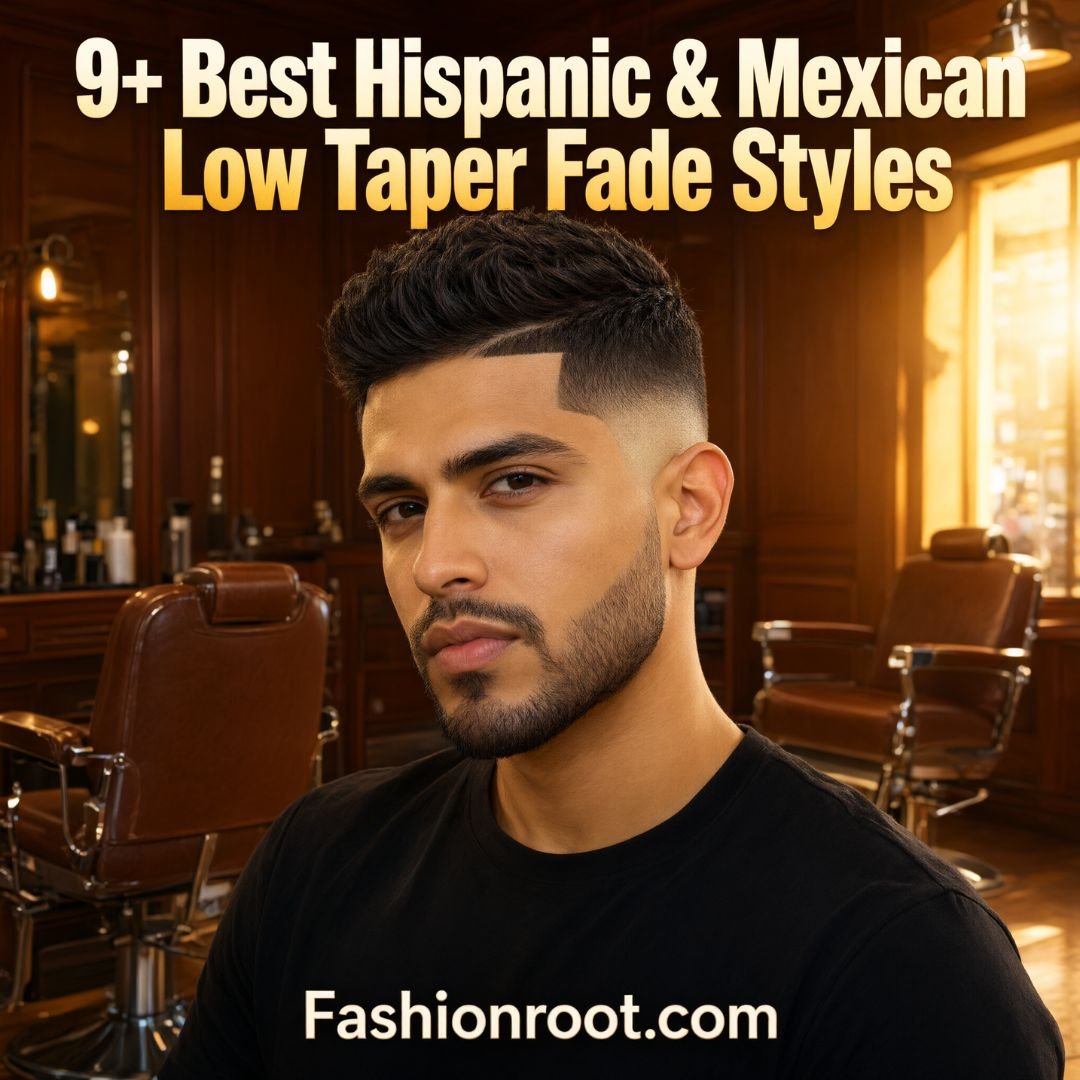
A Hispanic and Mexican low taper fade keeps the ears and neckline clean while leaving plenty of room to play on top. That’s why you’ll see it in barbershops across the US, from classic side parts to fluffy, textured crops.
This guide explains what a low taper fade is, how Hispanic and Mexican versions are usually described, and nine distinct styles to bring to your barber. You’ll also get hair type tips, barber-ready wording, styling steps, and upkeep advice.
A low taper fade gradually shortens the hair around the sideburns and neckline, starting low near the ear and nape, while the sides and top stay longer than they would in a standard fade. Hispanic and Mexican are cultural labels, not separate haircuts, so the best choice depends on your hair texture, length, and routine.
What Is a Low Taper Fade?
A low taper fade is a short, subtle cut where the hair gets gradually shorter around the sideburns and the back of the neck. The change stays low on the head, usually at or below ear level, and the hair above blends in naturally. The result looks neat without looking severe.
People often confuse a low fade with a low taper fade. A low fade usually cuts closer to the skin and shows a more visible gradient around the ear and nape. A taper keeps more length and looks softer. Many barbers use the terms loosely, so bring a photo to avoid surprises.
Low taper fades are popular because they:
- Look polished at work, school, and weekend events
- Work with short, medium, and longer hair on top
- Pair easily with a line up, a part, or a design
- Grow out more gracefully than a high or skin fade
- Suit straight, wavy, curly, and coily hair
Hispanic Low Taper Fade
Hispanic describes people with roots in Spanish-speaking countries, so it covers a wide range of backgrounds and hair textures. There’s no official Hispanic haircut. In barbershop talk, a Hispanic low taper fade usually means a clean, low taper paired with whatever top suits the client, such as a slick back, curls, or a textured crop.
Key Features
- Soft taper at the sideburns and neckline
- Flexible top length, from short to medium
- Edges that can be natural or sharply lined up
- Easy to adapt to straight, wavy, curly, or coily hair
Best For
Guys who want one dependable cut that works across hair types and lets them change their styling without changing barbers. It’s a smart pick if your hair texture falls somewhere between categories.
Mexican Low Taper Fade
Mexican refers to nationality, and Mexican low taper fade is mostly a search and style label. It’s commonly used for looks popular among Mexican American men, who often have thick, dark hair. Think of a fuller top with a crisp taper, a fluffy fringe, or a textured crop with sharp edges.
You may also see the Edgar cut nickname online for a blunt fringe with a taper. Its origins are debated and some people use it jokingly, so it’s safer to describe the cut to your barber instead of relying on the name.
Key Features
- A full, dense top with visible volume or texture
- Clean contrast between the tapered sides and the top
- A crisp line up around the forehead and temples
- Often a fringe, a blunt cut, or a messy, textured finish
Best For
Men with thick straight or wavy hair who like volume on top with sharp, tidy edges.
Hispanic vs Mexican Low Taper Fade
The two labels overlap heavily. One is a broad cultural term, the other is tied to a country, and both describe styles that barbers can build on almost any texture. Use the table as a loose guide, not a rulebook.
| Feature | Hispanic Low Taper Fade | Mexican Low Taper Fade |
| Meaning of the label | Broad cultural term | Nationality-based style label |
| Typical top | Varies widely | Often fuller, with a fringe or texture |
| Edge work | Soft to sharp | Often a crisp line up |
| Common hair types | Straight to coily | Often thick, straight, or wavy |
| Overall vibe | Versatile and adaptable | Bold contrast and volume |
The practical takeaway: choose by hair type, lifestyle, and personal taste, not by the label.
Popular Hispanic & Mexican Low Taper Fade Styles
Each of these nine styles looks different on top, so you can pick based on length and texture.
Textured crop with low taper:
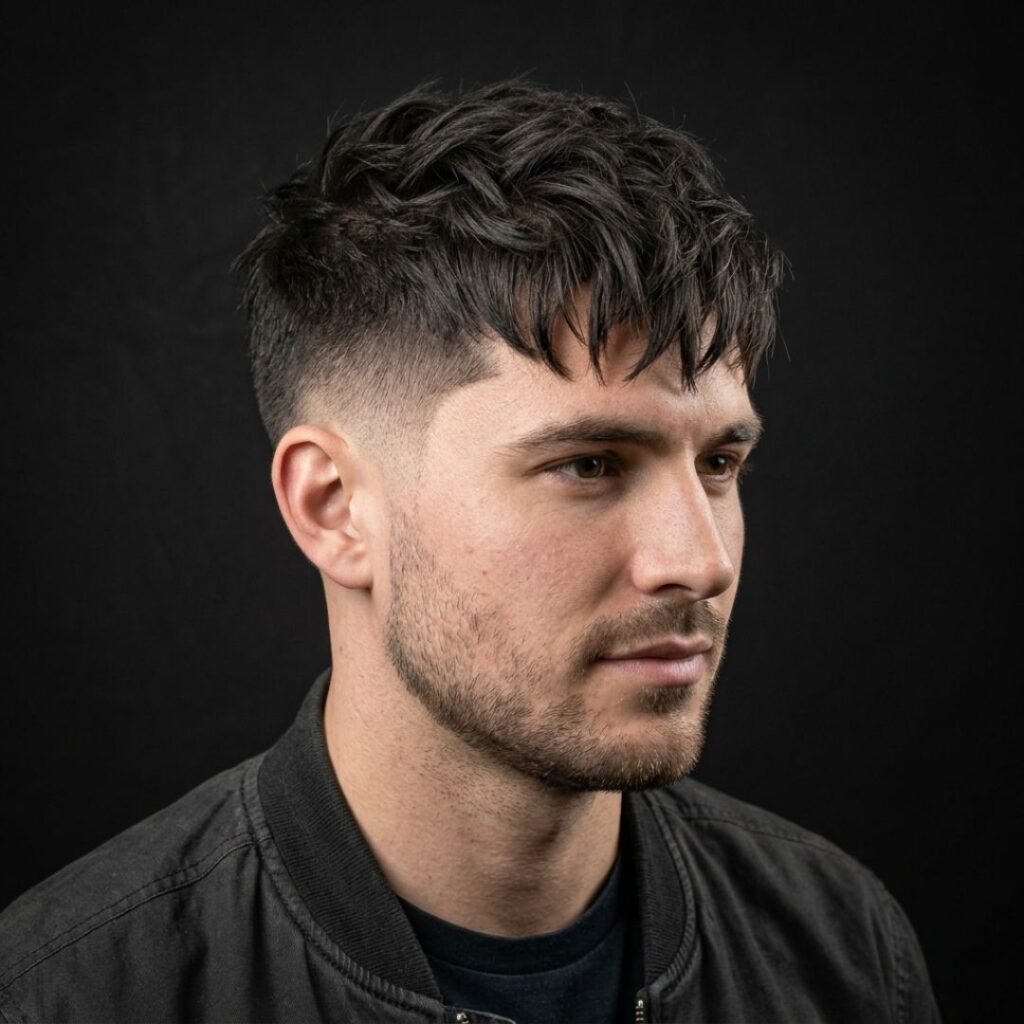
A short, choppy top with a matte finish. It works on short to medium hair, and a little clay gives the messy, lived-in look. It’s one of the easiest low fade with short hair options.
Curly fringe with low taper:
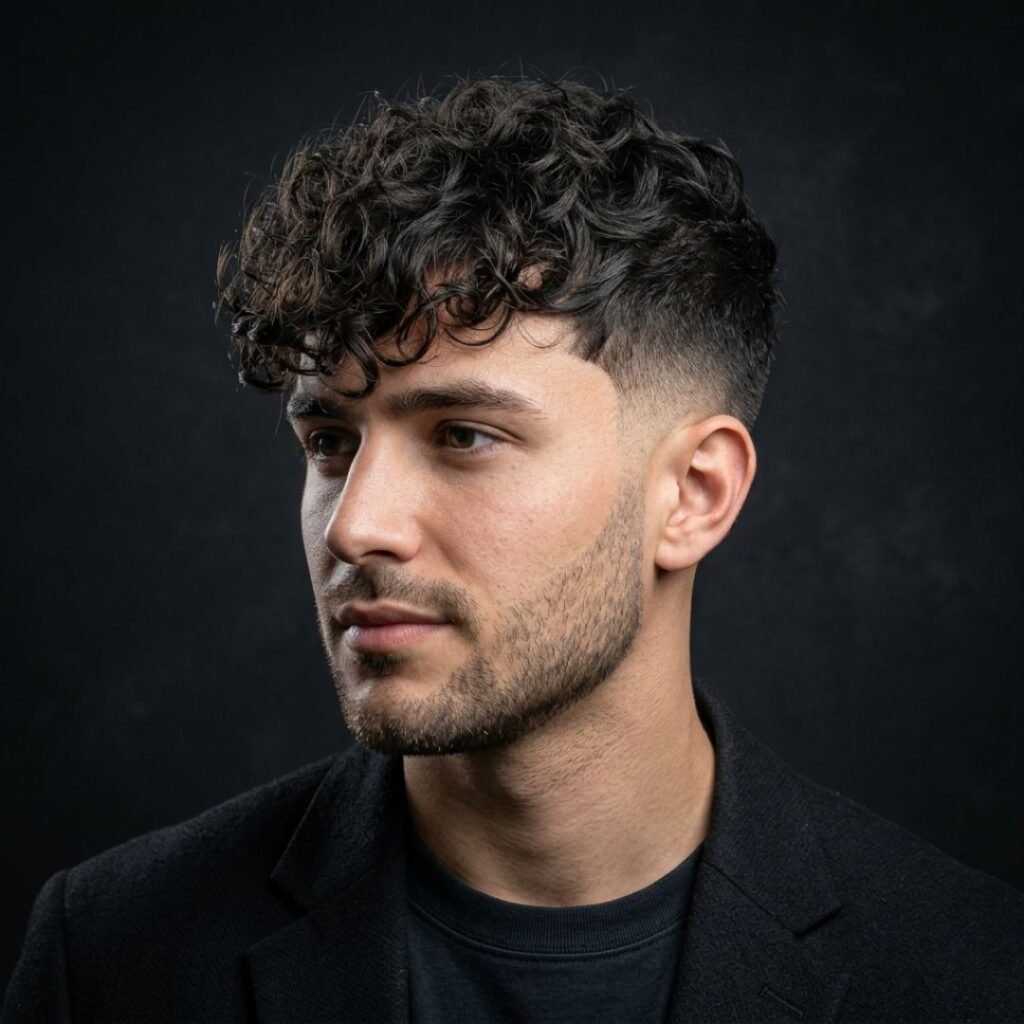
Curls are left longer on top and swept forward, while the sides stay tight and tidy. Use a curl cream to keep definition and reduce frizz.
Slick back with low taper:
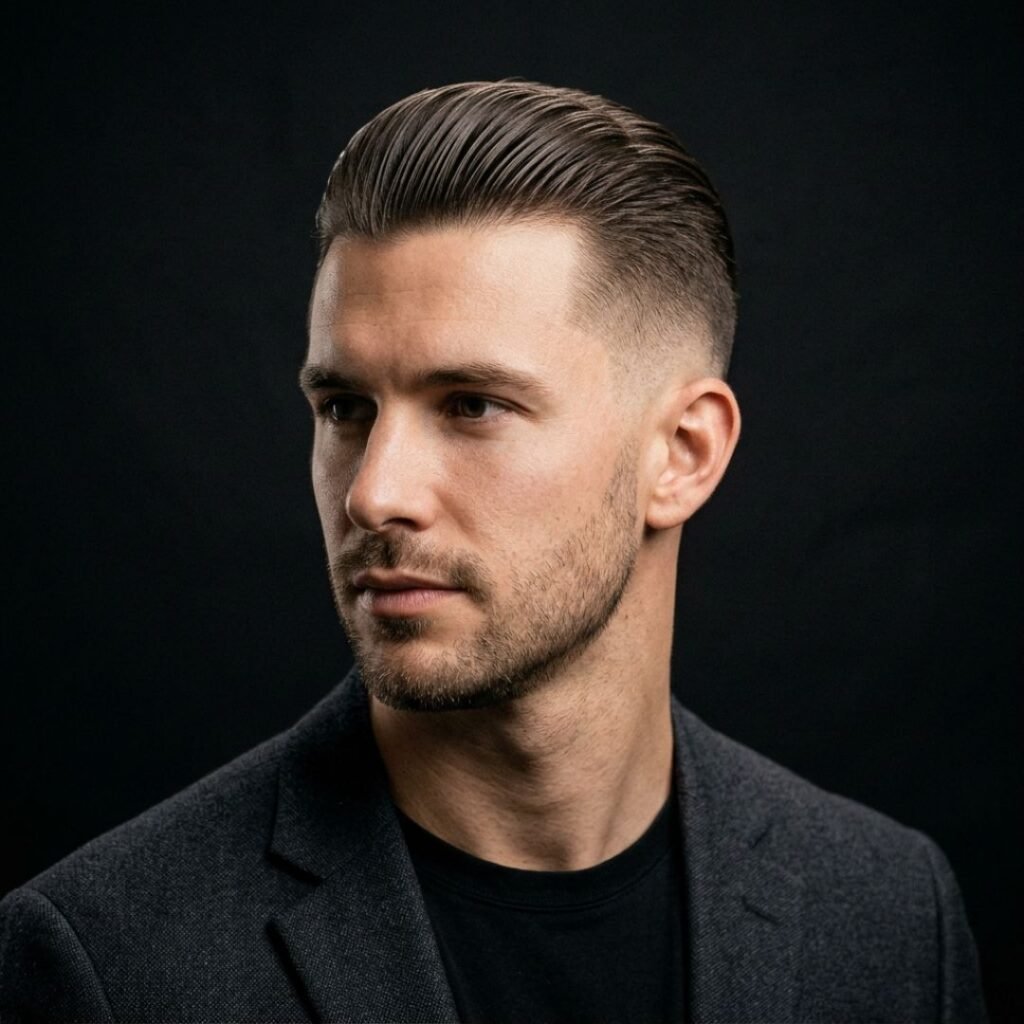
Medium-length hair is combed straight back for a sleek, formal look. It suits thick, dark hair and straight to wavy textures.
Side part with line up:
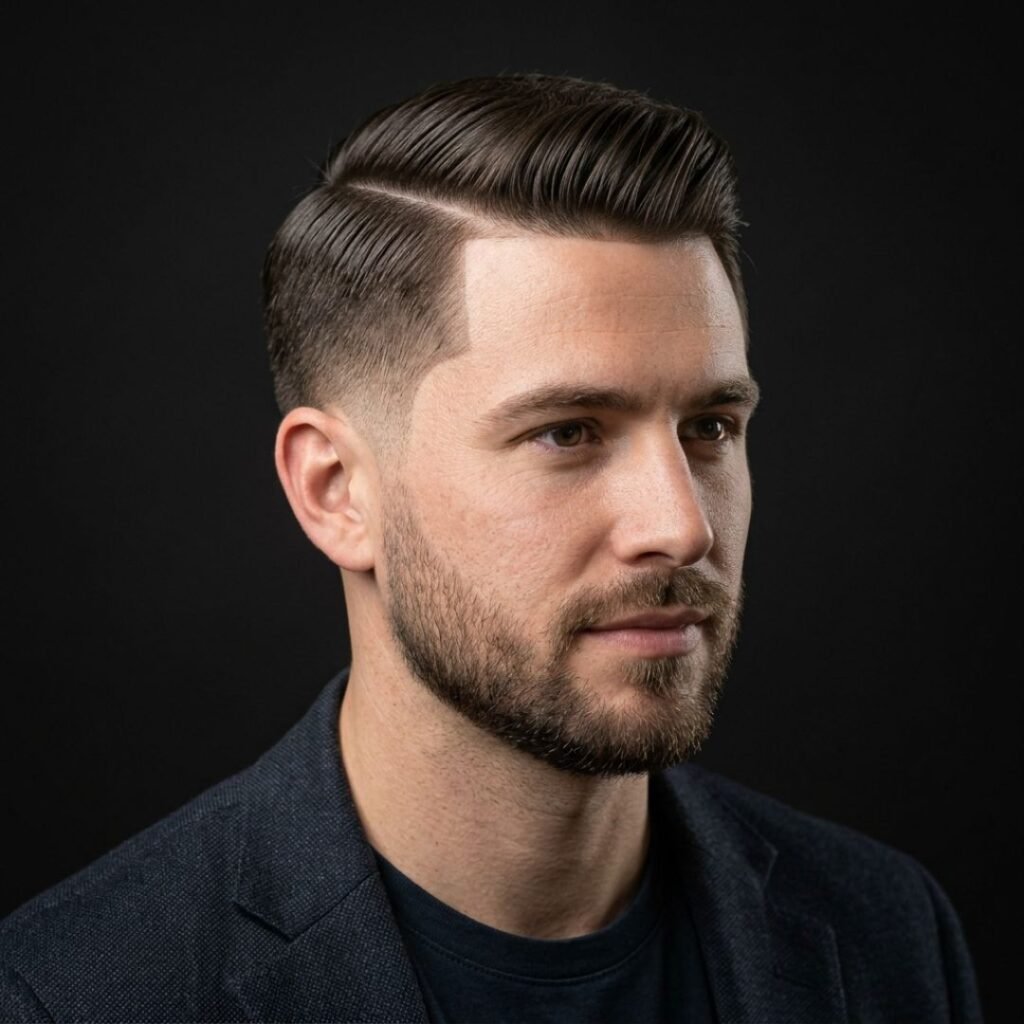
A classic part, sharp edges, and a clean forehead line. It’s polished enough for interviews and weddings, and the low maintenance routine is simple.
Quiff with low taper:
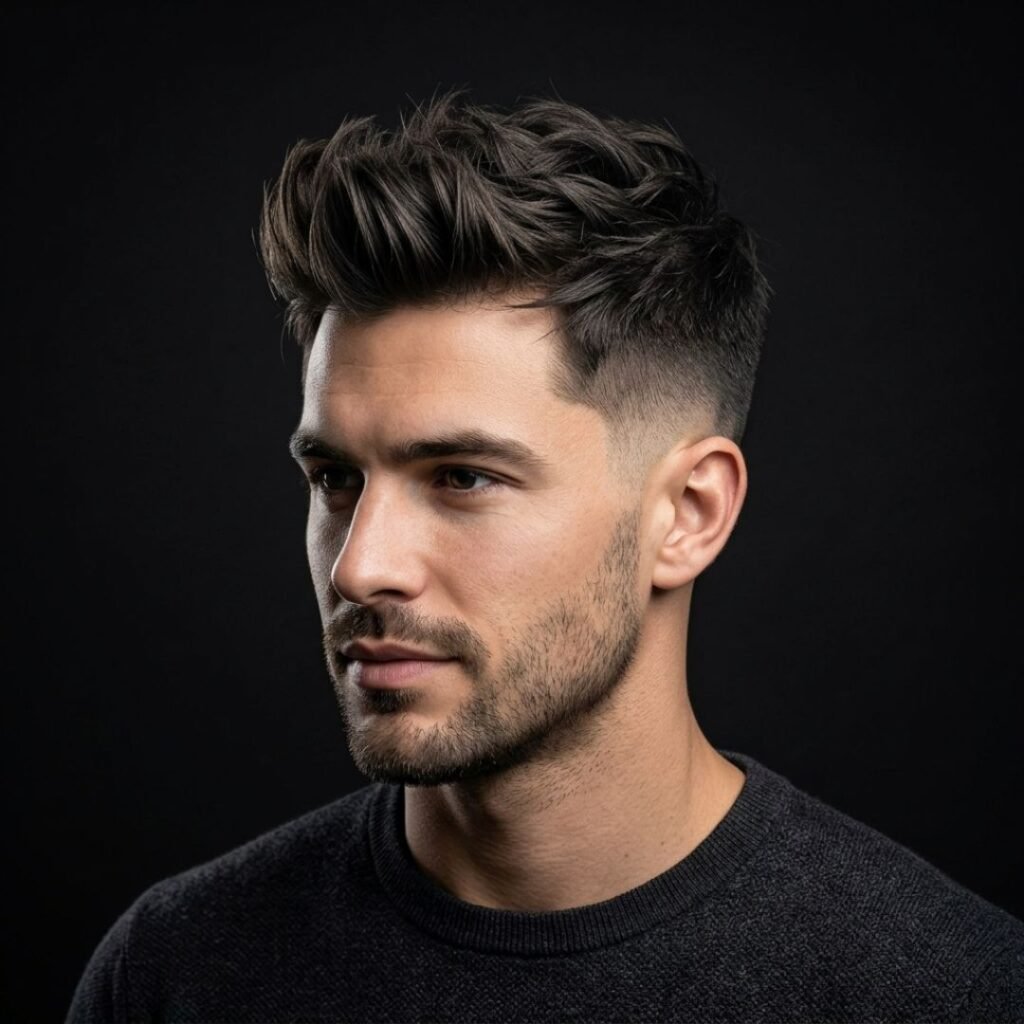
The front is lifted and pushed up and back with a blow dryer and styling paste. It adds height without needing extreme length.
Pompadour with low taper:
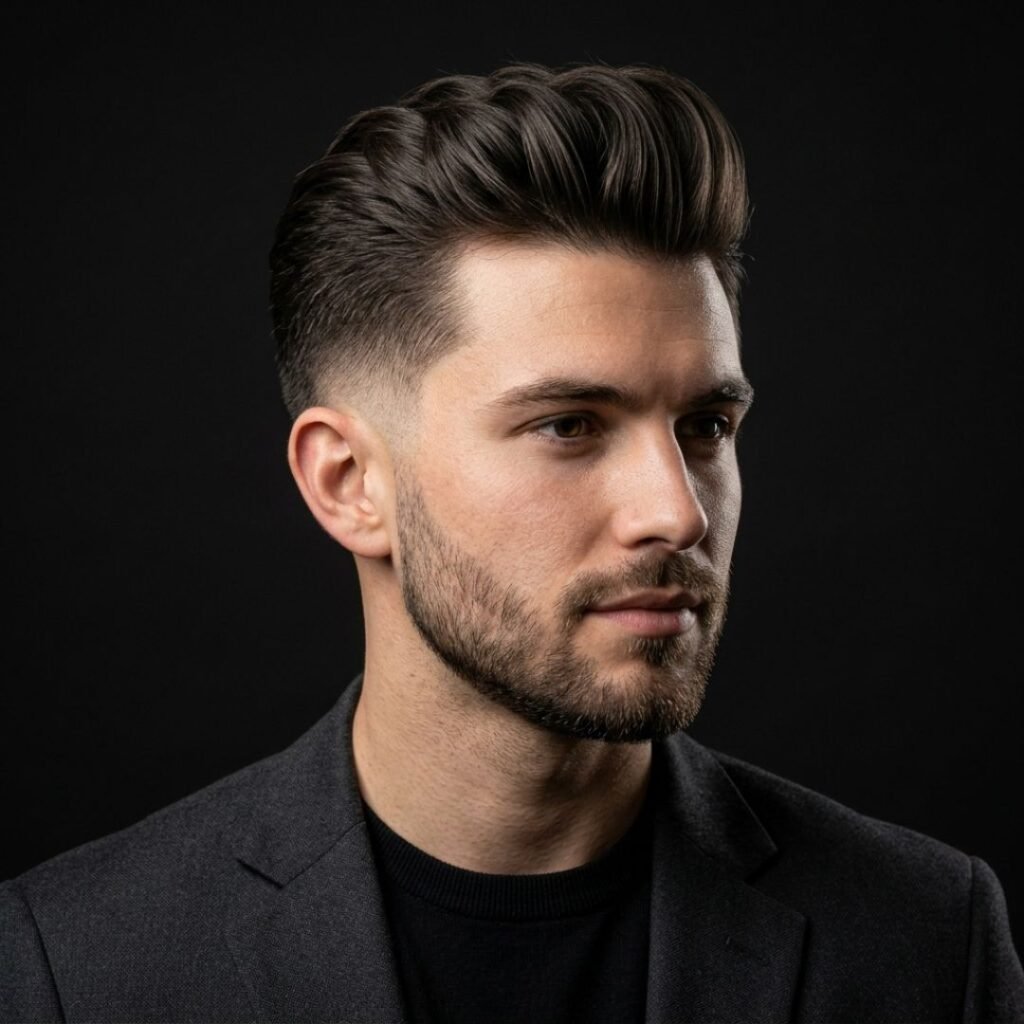
Bigger and bolder than a quiff, with more length at the front and strong volume. It needs medium to long hair on top and some daily styling time.
Fluffy, voluminous top with low taper:
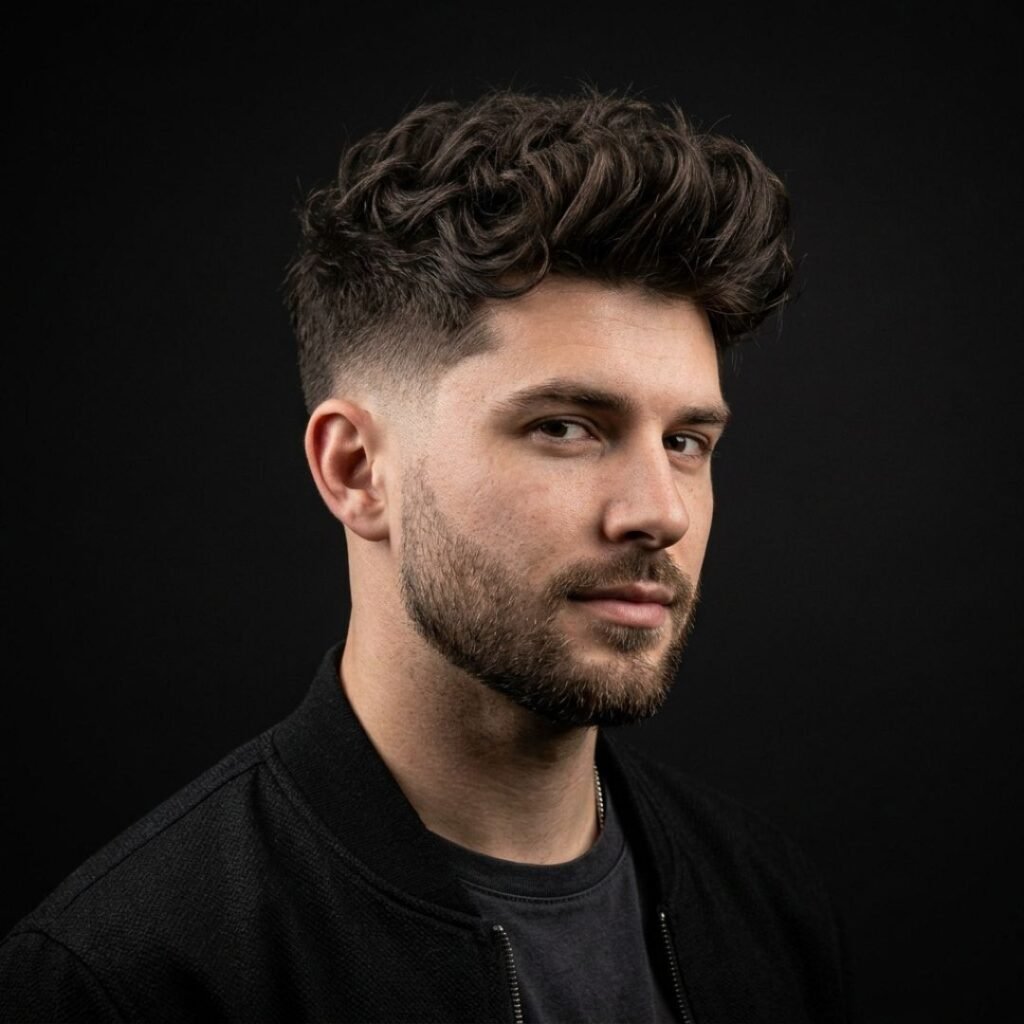
Often called Mexican fluffy hair, this look uses a sea salt spray or light powder and a blow dryer to build the body. It suits thick hair that holds volume well.
Low taper fade with mullet:
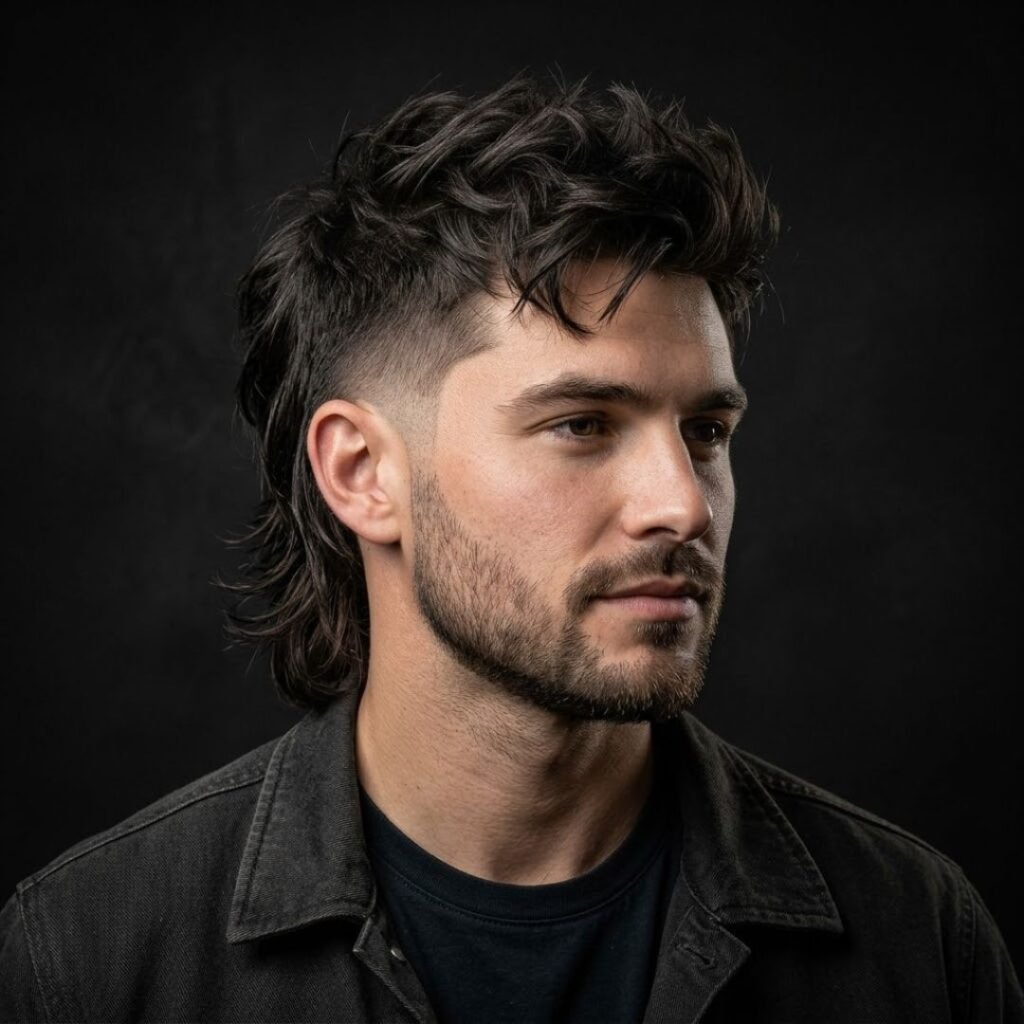
The top and back keep their length, with the taper cleaning up the sides. It’s a modern option for wavy and curly hair.
Low taper fade with design:
A small shaved part, a line, or a simple pattern adds personality. Choose a barber with a steady hand, and keep it subtle if you’re new to designs.
Face Shape & Hair Type Guide
Face shape matters less than texture for this cut, but it can help you fine-tune the top.
Face Shapes
- Oval: Most styles work, so choose based on your hair.
- Round: Add height with a quiff or pompadour to lengthen the face.
- Square: A textured crop or side part softens a strong jawline.
- Long or oblong: Skip excess height. A fringe or textured crop keeps proportions balanced.
Hair Types
- Straight: Holds a slick back, side part, or crop well. Fine strands may need a volumizing product.
- Wavy: Great for quiffs, textured tops, and a low taper fade with a mullet.
- Curly: Keep enough length on top for curls to form, and use a moisturizing cream.
- Coily: Ask for a rounded, shaped top and a clean taper. Moisture is key.
- Thick or dark: A low taper fade for thick hair helps control bulk. Ask your barber to thin or texturize the top if it feels heavy.
How to Ask Your Barber
Barbers work best with clear details and a reference photo. Describe the cut instead of using slang, since terms like low fade and taper vary between shops.
Choose:
- Where the taper starts: Say low, meaning around the ear and nape.
- Sides and back length: Share how short you want it at the bottom. For example, you could ask for a short guard at the edge, blended upward.
- Top length: Show how much you want to remove with your fingers.
- Edges: Choose a natural neckline, a squared neckline, or a sharp line up.
- Finish: Mention whether you want it messy, slick, parted, or voluminous.
A simple script: I’d like a low taper fade with a textured top, about two inches long, a natural neckline, and a light line up.
Styling & Care Tips
Styling takes a few minutes once you know your hair.
- Start with clean, towel-dried hair.
- Apply a pea-sized amount of product. Use clay or paste for texture, pomade for slick styles, and curl cream for curls.
- Blow dry the front for quiffs, pompadours, and fringes, using a comb or fingers to lift.
- Shape with your fingers or a comb, then add a touch more product if needed.
- Finish with a light hold spray if you want the style to last.
Wash with a gentle shampoo, and don’t pile on heavy products, since buildup can make hair look flat. If you see persistent flaking, itching, or irritation on your scalp, check with a dermatologist instead of guessing.
Cost & Touch-Ups
Prices vary by city and shop. Many US barbershops charge somewhere in the range of $25 to $60 or more for a haircut with a taper, and extras like designs or a beard trim can add to the cost. Tipping is customary.
Tapers grow out quickly because the contrast is where you see it. For a crisp look, many men return every two to three weeks. If you prefer a softer, grown-out feel, four to six weeks is common. A quick line up between full cuts can keep edges neat.
For More Info,Visit:
”Fashionrot.com“
Do & Don’t Tips
Do:
- Bring a photo and explain your daily routine
- Match the style to your hair type
- Book regular touch-ups to keep the taper clean
- Use a little product and build up slowly
Don’t:
- Ask for a high fade if you really want a subtle taper
- Choose a style that needs more styling time than you’ll give it
- Fight your natural texture, such as forcing curls flat
- Skip moisturizing if your hair or scalp runs dry
Frequently Asked Questions
What is the difference between a low fade and a low taper fade?
A low fade cuts closer to the skin and shows a more visible gradient. A low taper fade keeps more length and looks softer and more natural.
Can I get a low taper fade with curly hair?
Yes. Keep enough length on top for curls to form, and ask for a clean taper on the sides for contrast.
Is a low taper fade good for short hair?
Yes, as long as there’s a little length on top to blend into. A textured crop is a popular option for shorter hair.
How long does a low taper fade last?
It looks sharpest for about two to three weeks. After that it grows out softly, and many people book another cut within four to six weeks.
What should I say if I want the Mexican Edgar haircut?
Describe it instead of using the nickname: a low taper fade with a thick, blunt fringe and a light line up. Bring a photo for accuracy.
Conclusion
The best Hispanic & Mexican low taper fade is the one that fits your hair texture, schedule, and personal style. Start with the taper length, pick a top that works with your natural hair, and describe the details clearly so your barber can match your vision.
Once you’ve found a cut you like, keep it fresh with regular touch-ups and a simple styling routine. A low taper fade is flexible enough to grow with you, so don’t be afraid to try a new top next time.

2 thoughts on “9+ Best Hispanic & Mexican Low Taper Fade Styles (2026 Guide)”