Both cuts keep the sides short and the top longer, so choosing between a low taper vs burst fade can feel like splitting hairs. The real difference shows up around your ears and neckline, and it changes how the whole haircut frames your face.
This guide explains what each cut is, who it suits, how to ask your barber for it, and what upkeep looks like. By the end, you’ll know which one fits your hair type, your routine, and the look you want.
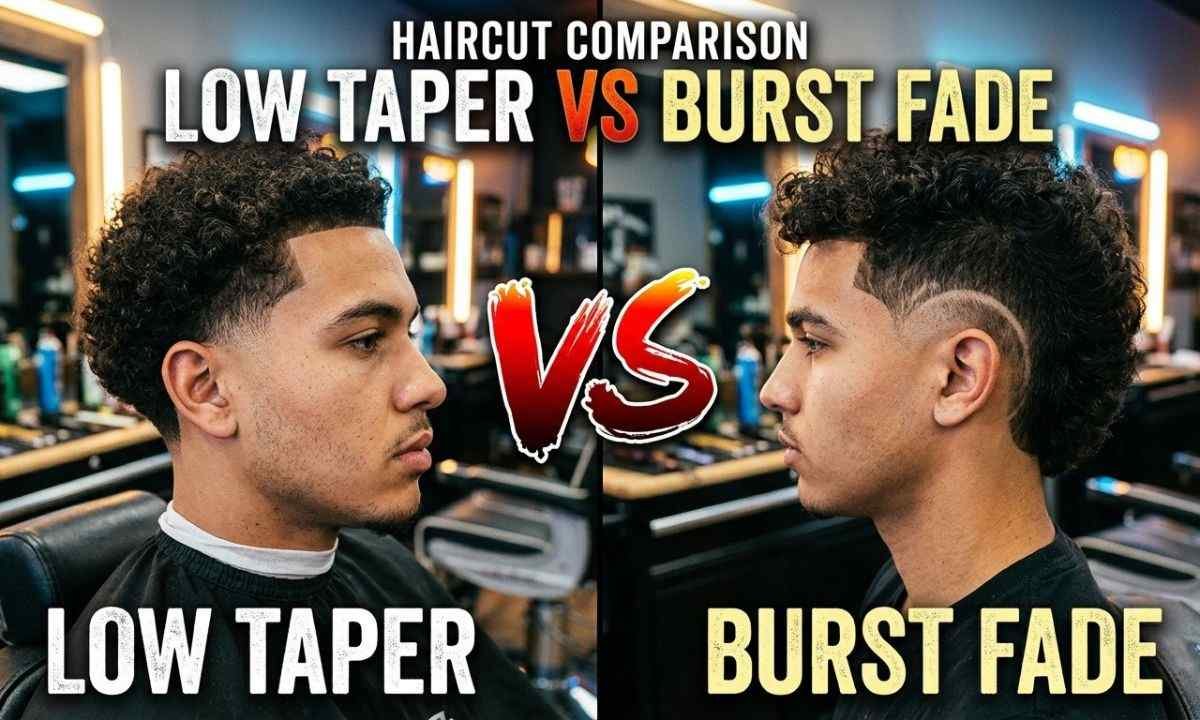
A low taper fade gently shortens the hair around the ears and neckline, starting low on the head for a clean, subtle finish. A burst fade curves in a semicircle around the ear and usually leaves more length at the back. Choose the low taper for a neat, low-maintenance look. Choose the burst fade for a bolder shape with more contrast.
What Is a Low Taper Fade?
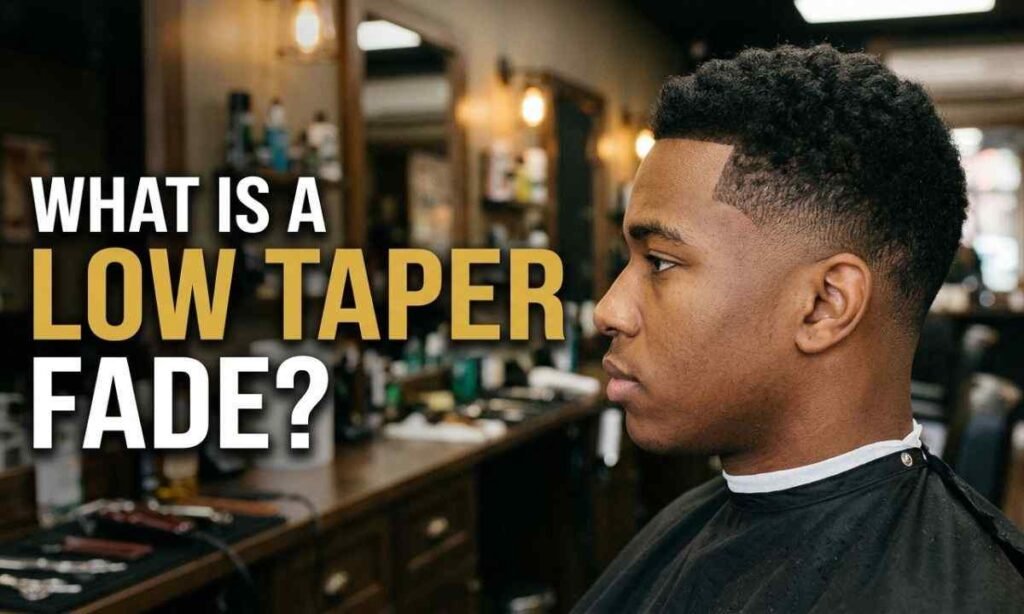
A low taper fade is a short haircut where the hair gets gradually shorter along the sideburns, around the ears, and across the nape, while the sides and top keep most of their length. The “low” part matters. The shortening begins near the hairline instead of climbing higher up the sides of the head. The result looks tidy but understated, which is why many barbers describe it as a clean and natural finish.
Low taper fades are popular because they:
- Look polished with nearly any top length, from a short crop to longer curls
- Fit offices, schools, weddings, and casual settings equally well
- Grow out gracefully, so a missed appointment is less noticeable
- Suit straight, wavy, curly, and coily hair
- Leave room for a sharp lineup or a soft, natural edge
Low Taper Fade Haircut for Men
Key Features
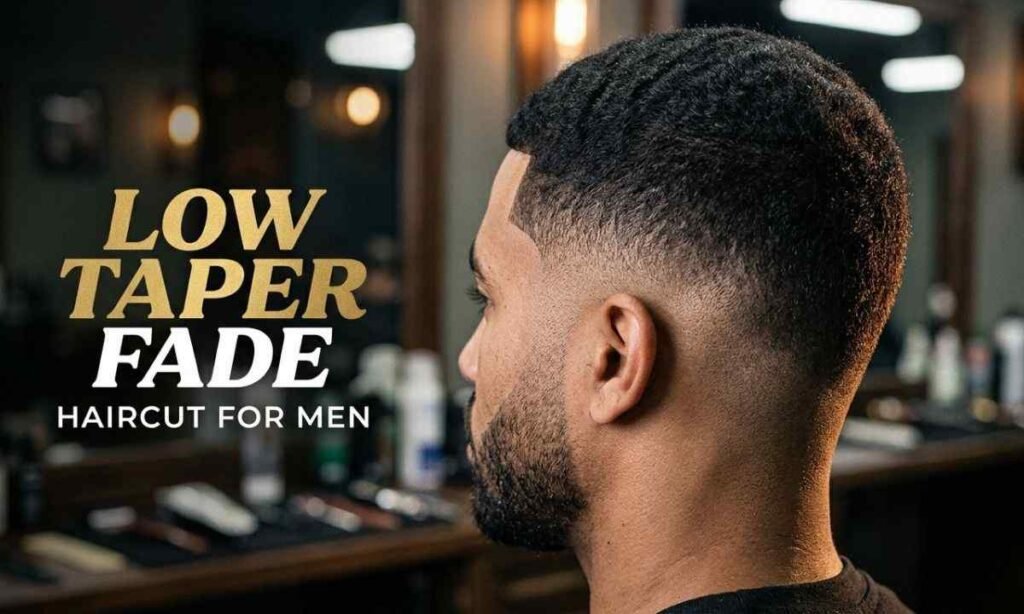
A low taper follows your natural hairline, so the shape mirrors your head instead of imposing a new one. The shortening is limited to the sideburns, the area around the ears, and the nape. Everything above that stays longer and blends in softly.
- The taper sits low and stays fairly even from front to back.
- The shortest point can be a clipper guard length or bare skin, depending on the barber and your preference.
- The edges can be crisp with a lineup or left natural for a softer look.
- The top can be cut short or left long enough to style.
You’ll also hear the terms taper and fade used almost interchangeably. Technically, a taper usually leaves some visible hair even at its shortest point, while a skin fade (sometimes called a bald fade) goes down to the skin. A low taper fade sits in between: a gentle blend with as little or as much contrast as you request.
Best For
The low taper suits men who want a neat haircut that doesn’t demand attention. It’s a good first fade, a safe choice for professional environments, and a practical option if you prefer to visit the barber less often. It also works well on thick hair, because the short sides remove bulk while the top keeps its weight.
Burst Fade Haircut for Men
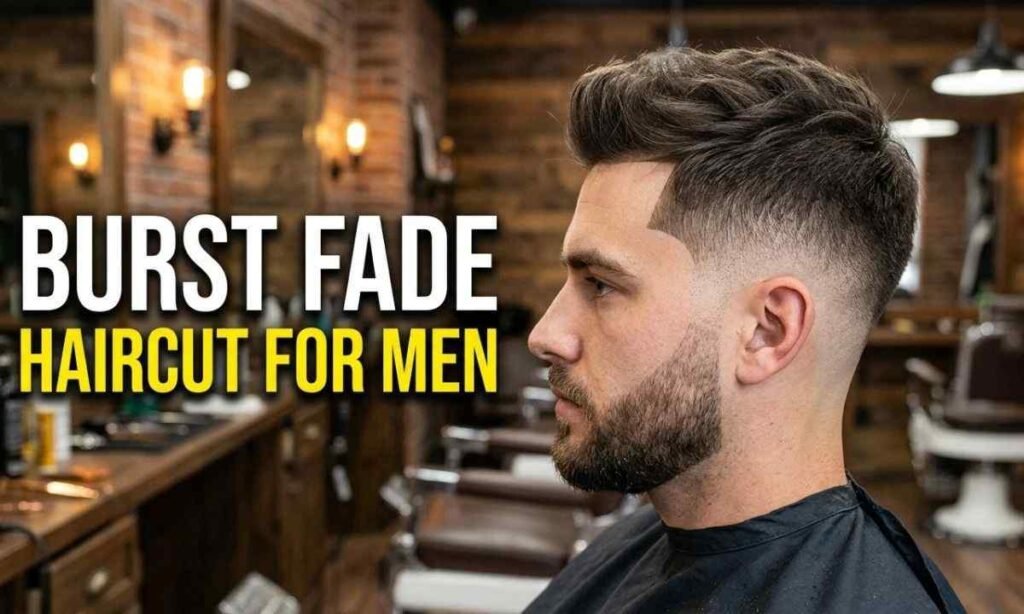
A burst fade is a curved fade that wraps around the ear in a rounded shape, almost like a ripple spreading outward. The hair above the curve stays longer, and the area behind it is often left fuller. That contrast is why the cut pairs so well with mohawks, mullets, and curly tops.
Key Features
- The fade arcs around the ear instead of running straight across the head.
- The back and nape are typically left longer, which creates the signature contrast.
- The shortest point around the ear is often skin-tight or very close to it.
- The top is usually longer, textured, or curly.
- The shape depends on precise detail work, so barber skill matters.
People sometimes call a burst fade a drop fade, but they aren’t the same cut. A drop fade follows the curve of the skull and dips behind the ear. A burst fade creates a round shape around the ear itself.
Best For
The burst fade suits men who want a bolder, more eye-catching haircut. It works especially well with curly, coily, or thick hair on top, since the clean sides make the texture stand out. It’s also a natural fit for anyone wearing a mohawk or a mullet. Expect to visit the barber more often, because the contrast looks best when the lines stay sharp.
Low Taper vs Burst Fade
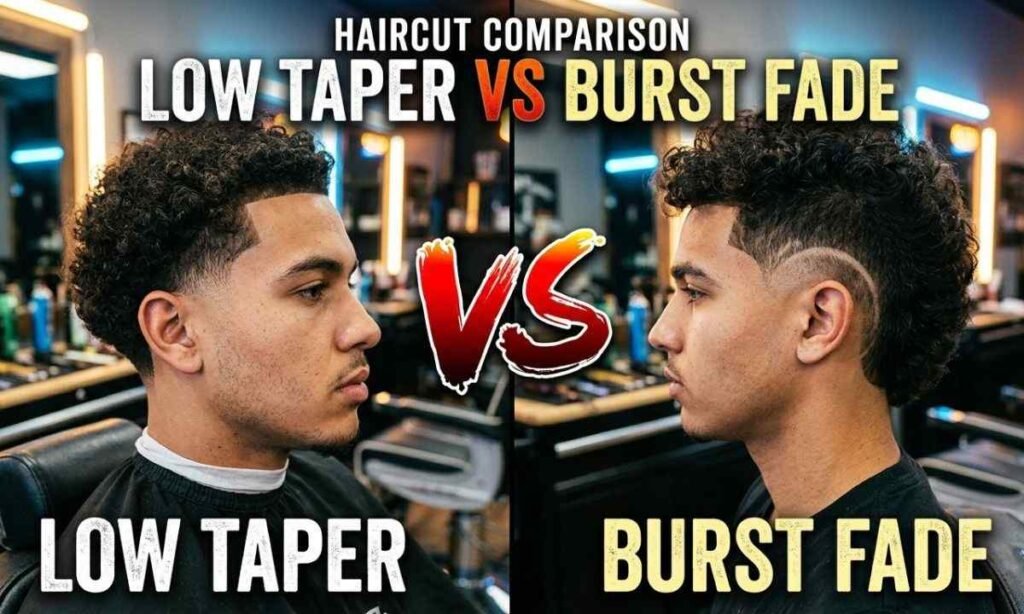
The easiest way to compare them is by how much attention each one asks for. A low taper blends in. A burst fade makes a statement.
| Feature | Low Taper Fade | Burst Fade |
| Shape | Soft and even, follows the hairline | Curved arc around the ear |
| Contrast | Subtle | Noticeable |
| Back and nape | Tapered short | Often left longer |
| Best top styles | Textured crop, waves, quiff, short curls | Curls, mohawk, mullet, longer top |
| Typical upkeep | Every 3 to 4 weeks | Every 2 to 3 weeks |
| Overall vibe | Clean and classic | Bold and modern |
A few related comparisons come up often. A low taper starts near the hairline, while a mid taper begins higher, around the temple, so it looks more defined and less subtle. A burst fade differs from a drop fade in the way described above: one circles the ear, the other follows the head’s curve behind it. And if you’re unsure about skin fade vs taper fade, remember that the skin version simply goes shorter, creating more contrast.
A simple rule of thumb: if you want your haircut to look like you just have good hair, pick the low taper. If you want people to notice the haircut itself, pick the burst fade.
Popular Low Taper and Burst Fade Styles
These six styles are distinct from one another in shape, top length, and upkeep.
- Low taper with a textured top. A short to medium top cut with scissors, then styled with a matte product for movement. It’s easy to maintain and looks natural on straight and wavy hair.
- Low taper with waves. The tapered sides keep the edges clean while the top is brushed to show the wave pattern. This works best on coily hair that is kept moisturized and brushed regularly.
- Low taper with a lineup. A crisp edge-up along the forehead and temples makes the cut look sharp and finished. It’s the most polished version but needs frequent cleanup.
- Burst fades with a mohawk. The curved sides frame a strip of longer hair down the center. It’s a bold option for thick hair.
- Burst faded with curly hair. Clean sides around the ears let natural curls take center stage. Curl cream keeps the top defined and reduces frizz.
- Burst fades with a mullet. The fade shapes the sides while the back stays long, which gives the cut a modern, edgy twist.
Face Shape & Hair Type Guide
No haircut is a rule for any one face or hair type, but a few guidelines can help you narrow your choice.
Face Shapes
- Oval: Both cuts work, so choose based on the look you prefer.
- Round: Add some height on top with either cut to create the illusion of length. A low taper keeps the sides tidy, while a burst fade adds extra structure.
- Square: The curve of a burst fade can soften a strong jaw, and a low taper keeps a squared face looking clean.
- Oblong: A low taper with a shorter top avoids adding extra length to the face.
- Heart: A low taper with a textured top or fringe helps balance a wider forehead.
Hair Types
- Straight hair: A low taper blends smoothly and shows the haircut clearly. A burst fade works with a textured quiff or a pushed-back top, but fine, straight hair can look flat without styling products.
- Wavy hair: Both cuts work well. A low taper keeps the waves tidy, and a burst fade adds contrast.
- Curly and coily hair: A burst fade frame curls beautifully. A low taper with waves is popular for Black men who want a clean, classic finish, and both cuts show sharp blends well on tighter textures.
- Thick hair: Short sides remove bulk. A burst fade handles thick hair well because the length stays on top and at the back.
- Fine or thin hair: A low taper keeps the hair looking fuller by limiting how much is removed.
How to Ask Your Barber
Terminology varies from shop to shop, so a reference photo is the most reliable tool. Show a picture from the front, side, and back if you can, then describe the details in plain language.
Choose:
- Fade type: Say “low taper fade” or “burst fade,” and point out where the fade should start.
- Shortest point: Choose skin, a #1 guard, or another length, depending on how much contrast you want.
- Top length: Tell the barber how much to leave and whether you want it cut with scissors or clippers.
- Back shape: For a burst fade, say whether you want the back left long, squared off, or blended.
- Edges: Decide on a sharp lineup, a natural edge, or no lineup at all.
A simple script might sound like this: “I’d like a burst fade with a skin-tight curve around the ears, keeping the back long, and about three inches on top.” If you’re not sure, ask your barber which option suits your hair type and growth pattern.
Also Read These For More Info:
“9+ Best Hispanic & Mexican Low Taper Fade Styles (2026 Guide)“
Styling & Care Tips
Styling is mostly about the top, since the fade takes care of itself between visits.
- Straight or wavy hair: Apply a small amount of matte clay or paste to damp or dry hair, then shape it with your fingers.
- Curly hair: Use a curl cream or light gel on damp hair, then let it air dry or use a diffuser.
- Coily hair with waves: Moisturize, brush in the direction of your waves, and cover your hair at night to protect the pattern.
- Thick hair: A light pomade or cream helps control volume without making hair stiff.
- Scalp care: Short sides expose more skin. Moisturize to prevent dryness, and apply sunscreen to exposed areas around the ears and neckline.
Wash with shampoo suited to your hair type, and avoid piling on heavy products that build up and make the top look dull.
Cost & Touch-Ups
Prices vary widely by city, shop, and barber experience. A fade usually costs more than a basic clipper cut because it takes longer and requires more precision, so ask about pricing before your appointment. Adding a lineup, beard trim, or styling can raise the total.
For touch-ups, a low taper generally looks best with a visit every three to four weeks. A burst fade needs more frequent attention, often every two to three weeks, because the contrast softens quickly.
Hair grows roughly half an inch per month on average, so even a small amount of growth changes the look. If you want to grow either cut out, a low taper is the easier one to transition from. A burst fade grows out with a visible curve around the ears, but the longer back can make the shift into a different style smoother.
Do & Don’t Tips
Do:
- Bring reference photos and explain what you like about them
- Tell your barber about your hair type and how you usually style it
- Book regular touch-ups if you want sharp lines
- Moisturize your scalp and protect it from the sun
- Ask questions if you’re unsure about terminology
Don’t:
- Assume every barber uses the same names for fades
- Pick a burst fade if you won’t commit to frequent upkeep
- Skip product on the top, since the fade only handles the sides
- Cut your own fade at home without practice, especially around the ears
- Choose a style based on trends alone without thinking about your hair
Frequently Asked Questions
Is a burst fade the same as a drop fade?
No. A burst fade forms a rounded arc around the ear, while a drop fade follows the curve of the head and dips behind the ear.
Which cut is easier to maintain?
The low taper is usually easier to maintain because its subtle blend stays presentable longer between appointments.
Can I get a low taper as the skin fades?
Yes. Ask your barber to take the shortest point down to the skin if you want more contrast while keeping the low placement.
Does a burst fade work with straight hair?
It can, especially with a textured top or a longer cut. Fine, straight hair may need styling products to avoid looking flat.
Is a low taper fade appropriate for work?
Yes. Its clean, subtle finish suits most professional settings, particularly when paired with a natural edge and a neat top.
Conclusion
The choice between a low taper vs burst fade comes down to how much contrast and upkeep you want. The low taper is subtle, versatile, and forgiving, making it a dependable choice for most hair types and daily routines. The burst fade is bolder, more shaped, and especially flattering on curly or thick hair.
Before your next appointment, decide how often you’re willing to visit the barber, how you plan to style the top, and how noticeable you want the cut to be. Bring a photo, describe the details clearly, and trust your barber to adjust the blend for your hair and head shape.